
Background jobs should each get a turn when the game can afford only one piece of work this tick.
Use it in a project
READY is an eight-bit eligible-task mask. Starting at NEXT modulo eight, select the first ready slot, return FOUND=1 and advance NEXT to the slot after it. With no ready tasks return SLOT=255, FOUND=0 and normalise NEXT without advancing it.
Include component.inc once (MOS callers include the shared 6502 implementation through it). Reserve the public fields in this exact order: SLOT, FOUND, NEXT, READY. They occupy 4 contiguous bytes. Also reserve the private workspace: T0, T1, T2, T3 (4 bytes). Array names in the explanation refer to the numbered consecutive bindings, such as C0, C1 and so on.
Call round_robin_service_init once at the intended reset boundary. It clears inputs as well as outputs and workspace. Set your starting state and configuration afterwards, then call round_robin_service_step whenever the described event occurs. The helper reads no device, waits for no frame and installs no interrupt handler.
| Ownership | Fields |
|---|---|
| Retain between calls | NEXT |
| Supply before service | READY |
| Read after service | SLOT, FOUND and updated NEXT |
Search at most one full circuit of the task slots. Advancing the cursor after a successful choice provides fairness among tasks that remain ready.
Reusable initialisation and service
; SPDX-License-Identifier: MIT
; Select Ready Work with Round-robin Fairness. See README.md for the byte interface and ownership.
; init clears the public fields and private workspace; set inputs afterwards.
round_robin_service_init:
    ld a,0
    ld (SLOT),a
    ld (FOUND),a
    ld (NEXT),a
    ld (READY),a
    ld (T0),a
    ld (T1),a
    ld (T2),a
    ld (T3),a
    ret
round_robin_service_step:
; SLOT = 255
    ld a,255
    ld (SLOT),a
; FOUND = 0
    ld a,0
    ld (FOUND),a
; NEXT = NEXT & 7
    ld a,(NEXT)
    and 7
    ld (NEXT),a
; T0 = NEXT
    ld a,(NEXT)
    ld (T0),a
; T1 = 0
    ld a,0
    ld (T1),a
; while T1 < 8:
round_robin_service_L1:
    ld a,(T1)
    cp 8
    jp c,round_robin_service_L2
    jp round_robin_service_L3
round_robin_service_L2:
; T2 = 1
    ld a,1
    ld (T2),a
; T3 = T0
    ld a,(T0)
    ld (T3),a
; while T3 != 0:
round_robin_service_L4:
    ld a,(T3)
    cp 0
    jp nz,round_robin_service_L5
    jp round_robin_service_L6
round_robin_service_L5:
; T2 = T2 << 1
    ld a,(T2)
    sla a
    ld (T2),a
; T3 = T3 - 1
    ld a,(T3)
    sub 1
    ld (T3),a
    jp round_robin_service_L4
round_robin_service_L6:
; T2 = READY & T2
    ld a,(READY)
    ld b,a
    ld a,(T2)
    ld c,a
    ld a,b
    and c
    ld (T2),a
; if T2 != 0:
    ld a,(T2)
    cp 0
    jp nz,round_robin_service_L7
    jp round_robin_service_L8
round_robin_service_L7:
; SLOT = T0
    ld a,(T0)
    ld (SLOT),a
; FOUND = 1
    ld a,1
    ld (FOUND),a
; NEXT = T0 + 1
    ld a,(T0)
    add a,1
    ld (NEXT),a
; NEXT = NEXT & 7
    ld a,(NEXT)
    and 7
    ld (NEXT),a
; return
    ret
    jp round_robin_service_L9
round_robin_service_L8:
round_robin_service_L9:
; T0 = T0 + 1
    ld a,(T0)
    add a,1
    ld (T0),a
; T0 = T0 & 7
    ld a,(T0)
    and 7
    ld (T0),a
; T1 = T1 + 1
    ld a,(T1)
    add a,1
    ld (T1),a
    jp round_robin_service_L1
round_robin_service_L3:
    ret
component_end:
Machine contract
AF/BC/DE/HL may change; IX/IY are preserved. A direct CALL needs two return-address stack bytes. The helper makes no nested calls and adds no other stack use. Its named scratch is private workspace, not a pointer, a ROM variable or shared zero-page space that the game may borrow concurrently. The samples use fixed symbol bindings. Scope or rename every label and binding, including the component_end measurement marker, and allocate a separate block for each independent instance. Different helpers can also use common field names, so combining them needs separate namespaces or explicitly renamed bindings. Give each block one mutation owner.
The 48K diagnostic boots through ROM tape loading and USR, disables interrupts and owns the screen. The helper performs no port or screen writes.
Adapt the caller
demo.asm supplies the bindings and include order. exercise.inc first runs table cases, then a separate client retaining state between calls. A game can call the public step entry directly and remove the diagnostic packet and display. Do not copy the diagnostic’s hardware takeover into an existing game loop.
Build with make ASM198X=/path/to/asm198x. The Makefile produces normal, custom, deliberately wrong and repaired programs. Tools must already be installed; the sample downloads nothing.
Bindings and include order
    org $8000
CUSTOM equ 0
BROKEN equ 0
COYOTE_STEPS equ 4
BUFFER_STEPS equ 4
TEXT_CAP equ 8
PROPERTY_COUNT equ 16
STREAM_BYTES equ 13
CRC_POLY equ 7
    include "caller.inc"
    include "exercise.inc"
component_start:
    include "component.inc"
    include "data.inc"
    include "cases.inc"
    include "../../physics/rectangle-overlap/display.inc"
code_end:
STATE:
SLOT: defb 0
FOUND: defb 0
NEXT: defb 0
READY: defb 0
T0: defb 0
T1: defb 0
T2: defb 0
T3: defb 0
input_ptr: defw 0
output_ptr: defw 0
cases_left: defb 0
ready: defb 0
preview: defs 8,0
OUTPUT: defs 1300,0
    end start
A client retaining state between calls
preview_rules:
    if CUSTOM
; NEXT = 7
    ld a,7
    ld (NEXT),a
; READY = 129
    ld a,129
    ld (READY),a
    if BROKEN
; NEXT = 0
    ld a,0
    ld (NEXT),a
    endif
    call checked_step
    call emit_state

    if BROKEN
; NEXT = 0
    ld a,0
    ld (NEXT),a
    endif
    call checked_step
    call emit_state

    if BROKEN
; NEXT = 0
    ld a,0
    ld (NEXT),a
    endif
    call checked_step
    call emit_state

    if BROKEN
; NEXT = 0
    ld a,0
    ld (NEXT),a
    endif
    call checked_step
    call emit_state
    ret
    else
; READY = 37
    ld a,37
    ld (READY),a
    if BROKEN
; NEXT = 0
    ld a,0
    ld (NEXT),a
    endif
    call checked_step
    call emit_state

    if BROKEN
; NEXT = 0
    ld a,0
    ld (NEXT),a
    endif
    call checked_step
    call emit_state

    if BROKEN
; NEXT = 0
    ld a,0
    ld (NEXT),a
    endif
    call checked_step
    call emit_state

    if BROKEN
; NEXT = 0
    ld a,0
    ld (NEXT),a
    endif
    call checked_step
    call emit_state
    endif
    ret
Customise it
Wrap service from slot seven back to slot zero. The maintained custom caller changes its inputs or client sequence rather than hiding a different implementation behind the same label. Compare every state of the two clients, not only their final display.
Custom client selection
    org $8000
CUSTOM equ 1
BROKEN equ 0
COYOTE_STEPS equ 2
BUFFER_STEPS equ 2
TEXT_CAP equ 4
PROPERTY_COUNT equ 16
STREAM_BYTES equ 13
CRC_POLY equ 49
    include "caller.inc"
    include "exercise.inc"
component_start:
    include "component.inc"
    include "data.inc"
    include "cases.inc"
    include "../../physics/rectangle-overlap/display.inc"
code_end:
STATE:
SLOT: defb 0
FOUND: defb 0
NEXT: defb 0
READY: defb 0
T0: defb 0
T1: defb 0
T2: defb 0
T3: defb 0
input_ptr: defw 0
output_ptr: defw 0
cases_left: defb 0
ready: defb 0
preview: defs 8,0
OUTPUT: defs 1300,0
    end start
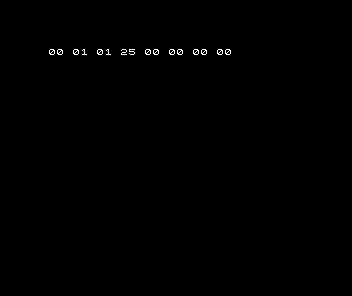
The custom diagnostic row is 00 01 01 81 00 00 00 00. The full client trace in the source explains how it gets there.
Mistake and repair
The wrong caller restarts the search at zero. A continuously ready low slot then starves later jobs. Retain NEXT between scheduling decisions.
The BROKEN branch lives in the sequential client, not the reusable helper. wrong.asm selects it; repaired.asm restores the normal call sequence. The repaired executable matches the normal program (for Spectrum, compare loaded CODE rather than the tape filename).
Select the deliberately wrong client
    org $8000
CUSTOM equ 0
BROKEN equ 1
COYOTE_STEPS equ 4
BUFFER_STEPS equ 4
TEXT_CAP equ 8
PROPERTY_COUNT equ 16
STREAM_BYTES equ 13
CRC_POLY equ 7
    include "caller.inc"
    include "exercise.inc"
component_start:
    include "component.inc"
    include "data.inc"
    include "cases.inc"
    include "../../physics/rectangle-overlap/display.inc"
code_end:
STATE:
SLOT: defb 0
FOUND: defb 0
NEXT: defb 0
READY: defb 0
T0: defb 0
T1: defb 0
T2: defb 0
T3: defb 0
input_ptr: defw 0
output_ptr: defw 0
cases_left: defb 0
ready: defb 0
preview: defs 8,0
OUTPUT: defs 1300,0
    end start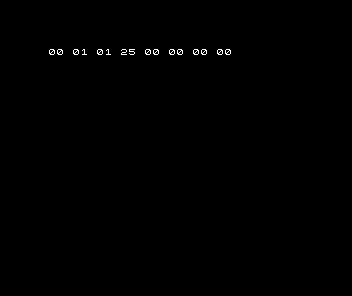
Cost and alternatives
The measured helper extent is 191 code bytes; public state is 4 bytes and private scratch is 4 bytes. There are no immutable helper tables. Caller data, the test cases, return-address stack, alignment and display buffers cost additional space. These are assembled sizes, not cycle measurements.
At most eight candidates. Fixed-priority service is cheaper to reason about for urgent jobs but can starve low priorities; combine policies only with explicit budgets.
This selects work; it does not measure or enforce a time budget. Each job must itself perform a bounded unit of work and return control.
Execution evidence
Four variants run on 48K PAL ROM tape load and USR, using Asm198x 0.0.72, Emu198x 0.44.2. Each executes 64 boundary/varied/error table cases, dirty initialisation and the separate retained-state client. An independent mathematical/container model checks every public byte after every call. This is bounded example coverage, not exhaustive correctness for every possible state.
The records retain loaded immutable code, completion, register sentinels, full packets, source/tool/firmware hashes and captures. The public gate validates these retained observations and rejects altered evidence; it does not run restricted firmware. No firmware is distributed. The eight displayed bytes are the first eight public fields, zero-padded when shorter; the packet includes every field.
Where it fits
Priority arbitration: Fair scheduling and urgent arbitration solve different service-order problems.