
Tally
C64 · BASIC
Roll two dice a thousand times and watch a bell curve appear
6 units
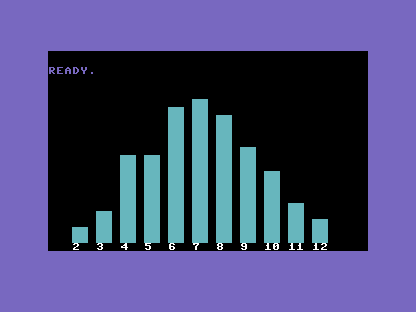
In Reflex the machine measured. Here it discovers. Tally rolls two dice over and over, counts how often each total comes up, and draws the result as a bar chart — and out of all that randomness a shape appears: a bell, tall in the middle at 7, short at the edges. The trick at its heart is emergence: you never tell the program to draw a bell, yet roll enough times and the bell is always there.
This is your first program that holds many numbers in one place. You’ll meet the array — a single named row of counters, one per total — and the value of a dice roll used as the index into it. Then you’ll turn those counts into a picture by POKEing bars straight to the screen, the same screen-as-canvas you met in Skyline, now carrying data.
What you’ll build:
- A single die roll, then two dice added into a total from 2 to 12
- An array of eleven counters, each total tallied by its own value as the index
- A thousand-roll run where the bell appears in the numbers
- The same counts drawn as POKEd bars — the bell as a picture
- A scale that fits any run to the screen, and labels along the bottom
- A run count the player sets, to roll 10, 100 or 1000 and watch the shape sharpen
6 units. About 5–6 hours. This follows Reflex and builds on Meet C64 BASIC.