
Amiga assembly
Learn 68000 assembly by building games
Amiga assembly is the concrete 68000 and custom-chip route.
This is the application layer: 68000 instructions, memory, Copper lists, Blitter operations, DMA, Paula audio, frame timing, and complete games under real Amiga constraints.
- AMOS or Blitz experience helps with the machine, but neither is required.
- The lessons explain variables, loops, branches and binary as they need them; Foundations covers them more slowly if you want it.
- Use The Craft when the game pauses on reusable ideas such as timing, collision, state, motion, or feel.
Before you begin
You'll need three things: Asm198x to assemble your code, Build198x to master it onto a bootable disk image, and an emulator such as FS-UAE with Kickstart ROM files. The tools are free. Kickstart ROMs are not: dump them from a real Amiga or buy them from Amiga Forever. The setup guide covers each step.
Set up your tools →Games
Start with Meet the Machine, then build Flock. Each game teaches new skills while building something you'll want to play. More games will be listed here as their lessons are published.

Meet the Machine
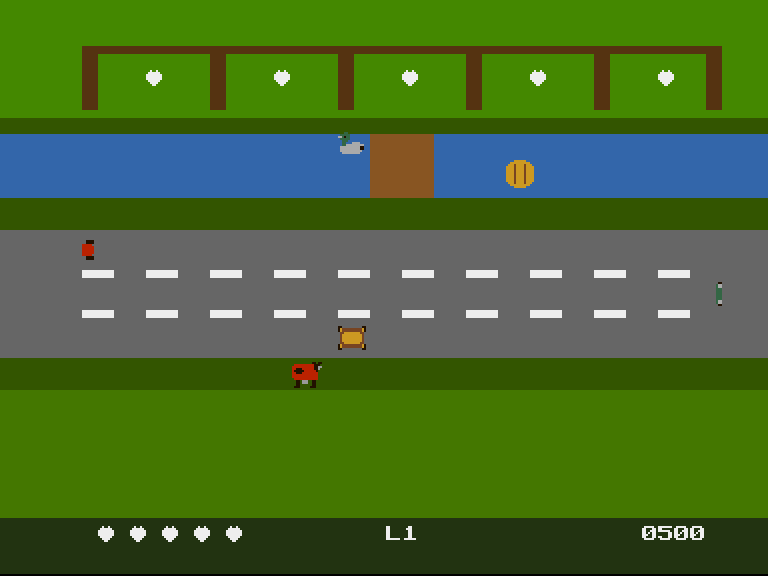
Flock
What you'll master
The parts of the Amiga these games put to work, from 68000 code to the custom chips.
Copper programming
Program the co-processor to change colours mid-frame, create gradient skies, and achieve effects impossible on other machines. The Copper runs in parallel with the CPU.
Blitter operations
Hardware-accelerated graphics: copy, fill, and combine bitmaps at speed. Understand DMA, channels, and how the Amiga achieves smooth scrolling and sprite movement.
68000 assembly
The instruction set that powered Amiga, Atari ST, Sega Genesis, and early Macintosh. Clean orthogonal design with 32-bit registers and flexible addressing modes.
Paula audio
4-channel 8-bit PCM audio at 28 kHz. Mix samples, create tracker music, and achieve sound quality that made the Amiga legendary.
Custom chipset
The Amiga's custom chips work in parallel, giving you hardware-accelerated graphics, sound, and I/O. This is what made the Amiga the ultimate games machine.
Ready to start?
The Primer starts with the build loop — write a little 68000 assembly, master it onto a bootable floppy, and run it on the Amiga. By the end of Unit 1 you'll have filled the screen with a single colour, and proved the whole toolchain end to end.
Start the Primer: Meet the Machine →