The Title
A title screen names the program and frames the experience — it stops being a script and starts being a thing.
The program works. But it has no name. It starts with a question, not an introduction.
  10 BORDER 0: PAPER 0: INK 7: CLS
  30 PRINT AT 3, 6; BRIGHT 1; "*** STORY BUILDER ***"
  40 PRINT
  50 INPUT "What is your name? "; n$
  60 INPUT "Name an adjective: "; a$
  70 INPUT "Name an animal: "; b$
  80 INPUT "Name a place: "; p$
  90 INPUT "Name a food: "; f$
 100 CLS
 130 PRINT "Once upon a time, "; n$
 140 PRINT "found a "; a$; " "; b$
 150 PRINT "hiding in "; p$; "."
 160 PRINT
 170 PRINT "They fed it "; f$
 180 PRINT "and it followed them home."
 190 PRINT
 200 PRINT "The end."
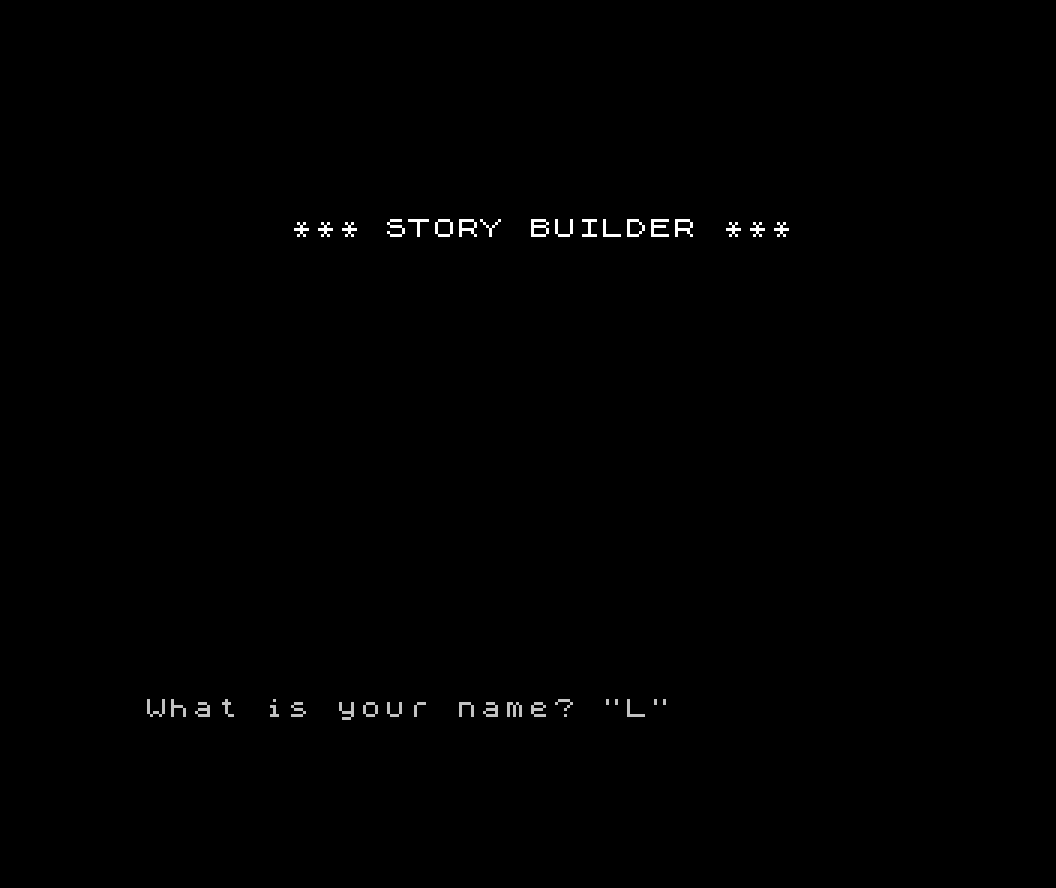
Two new lines drop into the gap we left back in unit 1: 30 PRINT AT 3, 6; BRIGHT 1; "*** STORY BUILDER ***" and 40 PRINT. Nothing else moves — that is what the reserved space was for. AT 3, 6 places the title near the top of the screen and BRIGHT 1 makes it stand out; the blank line on 40 keeps a little space beneath it.
Run it. The screen clears, shows *** STORY BUILDER ***, then asks for your name. The title stays visible while you answer questions. After the last question, line 100 clears it all away for the story reveal.
Why a title matters
A title turns “a program that does something” into “a thing with a name.” It is the difference between a script and a product. When you show this to someone, the first thing they see is the name — not a question. That framing matters. It says “this is something I made” before it says “type your name.”
The asterisks are decoration. They frame the title and make it look like a header. You could use dashes, equals signs, or nothing at all. The point is: the program announces itself.