Planting
Sow seed grain into acres and reap a harvest you cannot control — the second claim on your grain, and the tension that makes the game.
Grain feeds people, but it also seeds fields — and the same store pays for both. Planting is the second decision, and it adds the thing that turns the game from arithmetic into judgement: a harvest whose size you do not control.
  10 BORDER 0: PAPER 0: INK 7: CLS
 100 RANDOMIZE
 110 LET pop = 100: LET grain = 2800
 120 LET land = 1000: LET yr = 1
 130 CLS
 140 LET a$ = "*** YEARFALL ***": LET y = 0: GO SUB 9000
 150 PRINT AT 1, 4; "Year "; yr; " of 10"
 160 PRINT AT 3, 2; "Population: "; pop
 180 PRINT AT 4, 2; "Grain: "; grain
 190 PRINT AT 5, 2; "Land: "; land; " acres"
 260 INPUT "Grain to feed: "; feed
 270 IF feed < 0 OR feed > grain THEN GO TO 260
 280 INPUT "Acres to plant: "; plant
 290 IF plant < 0 OR plant > land THEN GO TO 280
 300 IF plant > grain - feed THEN GO TO 280
 310 IF plant > pop * 10 THEN GO TO 280
 400 LET grain = grain - feed - plant
 410 LET starved = 0
 420 IF feed < pop * 20 THEN LET starved = pop - INT (feed / 20)
 430 LET pop = pop - starved
 440 LET yield = INT (RND * 5) + 1
 450 LET harvested = plant * yield
 460 LET grain = grain + harvested
 600 PRINT AT 8, 2; "Starved: "; starved
 610 PRINT AT 9, 2; "Population: "; pop
 620 PRINT AT 10, 2; "Harvest: "; harvested; " ("; yield; "/acre)"
 630 PRINT AT 11, 2; "Grain: "; grain
 640 STOP

9000 PRINT AT y, (32 - LEN a$) / 2; BRIGHT 1; a$
9010 RETURN
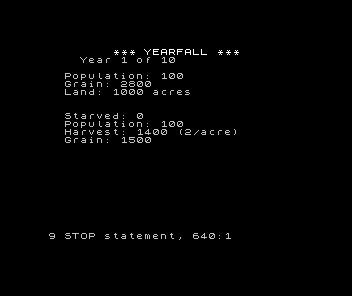
Three constraints at once
Lines 280–310 read the acres to plant and check it against everything that limits it: you cannot plant
more land than you own (290), more grain than you have left after feeding (300), or more than your
people can work — ten acres each (310). One decision, three guards, each a single IF that loops
back. The middle one is the heart of the game: IF plant > grain - feed ties planting to feeding, so
every bushel eaten is a bushel that cannot be sown. That is opportunity cost made literal.
A harvest out of your hands
Lines 440–460 resolve the planting. yield = INT(RND * 5) + 1 is the catch — a random one-to-five
grain per acre, decided after you have committed your seed. harvested = plant * yield is added back
to the store. You choose how much to plant; chance decides what it returns. A yield of 1 is a famine,
a 5 is a windfall, and the average is 3 — so planting for the average and getting the worst is exactly
how a kingdom falls. This is the first time a player’s careful allocation is handed to luck, and
learning to leave a margin for the bad year is the skill the game teaches.
Next: stop playing a single year and run ten of them.